
Insomnia Disorder: What It Is and Why It Matters
Insomnia disorder is a common but serious sleep condition that affects a person’s ability to fall asleep, stay asleep, or get restorative sleep. While occasional sleep trouble is normal, chronic insomnia can interfere with daily functioning, emotional regulation, physical health, and overall quality of life.
For individuals seeking insomnia treatment in San Diego, professional psychiatric care can help identify underlying causes and provide effective treatment options. Learn more about our psychiatric services. When left untreated, insomnia can worsen anxiety, depression, bipolar disorder, and other psychiatric conditions.
Understanding insomnia disorder is the first step toward effective treatment.
Common Symptoms of Insomnia Disorder
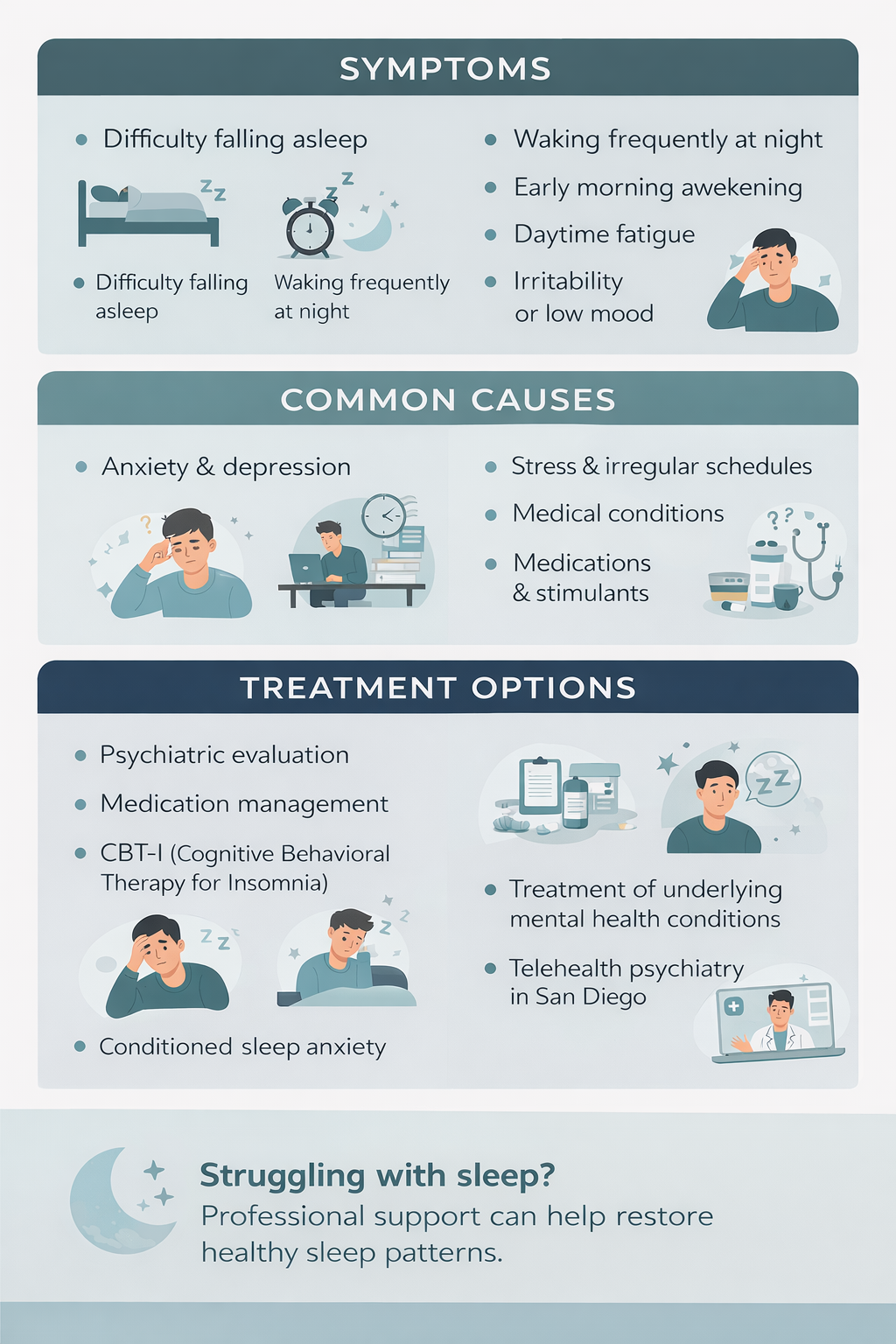
Insomnia symptoms vary, but people with insomnia disorder often experience one or more of the following at least three nights per week:
- Difficulty falling asleep despite feeling tired
- Waking up frequently during the night
- Waking too early and being unable to return to sleep
- Non-restorative or poor-quality sleep
- Daytime fatigue or low energy
- Difficulty concentrating or remembering information
- Irritability, anxiety, or low mood
- Increased stress around bedtime
If these symptoms persist for three months or longer, a clinical diagnosis of insomnia disorder may be appropriate.
What Causes Insomnia Disorder?
Insomnia disorder rarely has a single cause. Instead, it is often influenced by a combination of psychological, biological, and environmental factors.
Common contributors include:
Mental health conditions
Anxiety disorders, depression, PTSD, bipolar disorder, and ADHD are strongly associated with insomnia. Sleep disruption can both contribute to and worsen psychiatric symptoms.
Stress and lifestyle factors
Work stress, caregiving responsibilities, irregular schedules, and high screen use before bed can disrupt normal sleep cycles.
Medical and neurological conditions
Chronic pain, hormonal changes, sleep apnea, and neurological disorders may interfere with sleep quality.
Medications and substances
Certain psychiatric medications, stimulants, caffeine, alcohol, and nicotine can affect sleep onset and maintenance.
Conditioned sleep anxiety
Over time, repeated difficulty sleeping can lead to anxiety around bedtime, making insomnia self-perpetuating.
A psychiatric evaluation helps determine which factors are contributing to insomnia and guides personalized treatment.
How Insomnia Is Diagnosed
Insomnia disorder is diagnosed clinically based on symptoms, duration, frequency, and impact on daily functioning. A psychiatrist may assess:
- Sleep patterns and routines
- Mental health history
- Current medications
- Stress levels and lifestyle factors
- Co-occurring psychiatric or medical conditions
In some cases, sleep tracking or referrals for sleep studies may be recommended to rule out other sleep disorders.
Insomnia Treatment Options in San Diego
Telehealth has made it easier to access care. Working with a telehealth psychiatrist in San Diego allows patients to receive support from home. Explore our telehealth psychiatry services. Treatment plans are individualized and may include one or more of the following approaches.
Psychiatric Evaluation and Medication Management
For some individuals, medication may be appropriate to support sleep while addressing underlying mental health conditions. A psychiatrist can determine whether sleep medications, antidepressants, mood stabilizers, or other treatments are clinically indicated and safe.
Medication is typically used as part of a broader treatment plan rather than a standalone solution.
Cognitive Behavioral Therapy for Insomnia (CBT-I)
CBT-I is a structured, evidence-based therapy that helps individuals change thought patterns and behaviors that interfere with sleep. It focuses on sleep habits, sleep anxiety, and conditioning around bedtime.
CBT-I is considered a first-line treatment for chronic insomnia and can be used alongside psychiatric care.
Treating Co-Occurring Mental Health Conditions
When insomnia is linked to anxiety, depression, PTSD, or bipolar disorder, treating the underlying condition often improves sleep. Integrated psychiatric care is especially important in these cases.
Telehealth Psychiatry for Insomnia
Telehealth psychiatry allows patients in San Diego and across California to access insomnia treatment from home. Virtual appointments make it easier to receive consistent care, medication management, and follow-up support without disrupting daily routines.
Telehealth can be particularly helpful for individuals whose insomnia makes travel or early appointments difficult.
When to Seek Professional Help for Insomnia
You may want to seek psychiatric care if:
- Sleep problems last longer than a few weeks
- Insomnia interferes with work, relationships, or daily functioning
- Sleep issues worsen anxiety, depression, or mood instability
- Over-the-counter sleep aids are ineffective or needed regularly
- You feel exhausted despite spending adequate time in bed
Early intervention can prevent insomnia from becoming chronic and reduce its impact on mental health.
Living With Insomnia: Practical Support Between Appointments
In addition to professional treatment, small changes can support better sleep:
- Maintain a consistent sleep and wake schedule
- Limit caffeine and alcohol, especially in the evening
- Reduce screen time before bed
- Create a calm, comfortable sleep environment
- Avoid forcing sleep; focus on relaxation instead
These strategies are most effective when combined with psychiatric guidance.
Insomnia Treatment at Sacred Psychiatric Services
A thorough A thorough psychiatric evaluation can determine whether insomnia is related to anxiety, depression, or other mental health conditions. Integrated mental health care in San Diego supports both sleep and overall well-being.
can determine whether insomnia is related to anxiety, depression, or other mental health conditions. Integrated mental health care in San Diego supports both sleep and overall well-being.
Sacred Psychiatric Services provides comprehensive mental health care, including evaluation and treatment for insomnia disorder. Care is tailored to each individual and may include psychiatric assessment, medication management, and telehealth services throughout California.
If insomnia is affecting your mental health or quality of life, professional support can help restore healthy sleep patterns and improve overall well-being.